Project overview
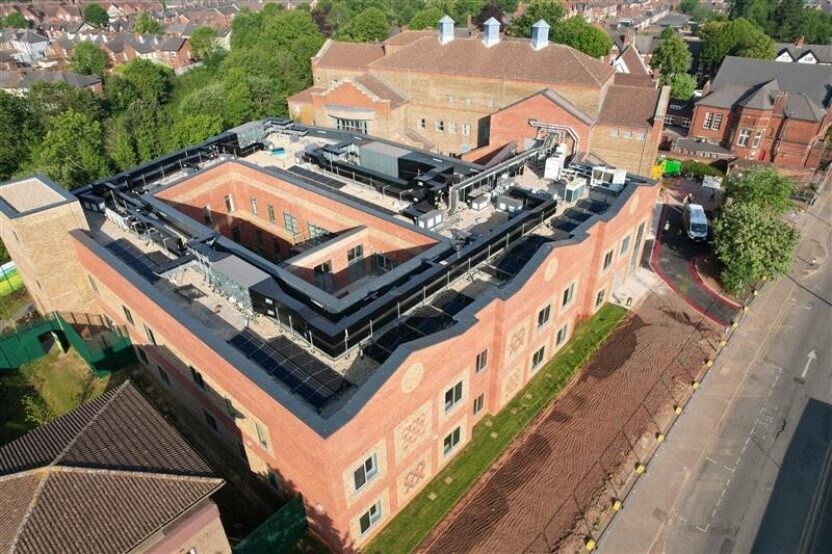
Edward Street Hospital has long provided specialist services for older adults with mental health conditions across the Black Country. However, the existing facility no longer met modern standards for privacy, dignity, infection prevention or dementia-friendly care. As part of a national programme to eliminate dormitory accommodation in mental health settings, Black Country Healthcare NHS Foundation Trust embarked on a £30 million redevelopment to transform the hospital into a modern, therapeutic environment focused on recovery and wellbeing.
Archus supported the programme from its earliest stages, acting as Business Case Author and P22 Project Manager before taking on the role of NEC3 Project Manager throughout delivery. Working closely with the Trust, Integrated Health Projects (IHP), WT Partnership and other stakeholders, we provided project leadership, programme management and stakeholder engagement to ensure clinical requirements remained at the centre of every design and construction decision.
The redevelopment introduced modern inpatient accommodation, therapeutic spaces and dementia-sensitive design features that support personalised care and recovery. Throughout the programme, Archus coordinated project teams, managed programme risks and maintained alignment between operational requirements, clinical priorities and construction delivery.
The completed facility now provides a safe, high-quality environment that enhances patient experience, supports clinical outcomes and reflects the Trust’s commitment to providing modern mental health services for older adults.
Outcomes
- Delivered a £30 million redevelopment that replaced outdated dormitory accommodation with modern, patient-centred facilities.
- Successfully managed the project lifecycle from business case development through construction delivery as NEC3 Project Manager.
- Created a therapeutic, dementia-friendly care environment that improves privacy, dignity and recovery outcomes.
The challenge
The existing Edward Street Hospital facility was no longer suitable for delivering modern mental health services. Dormitory-style accommodation limited privacy and dignity, while ageing infrastructure created challenges around infection prevention, accessibility and the delivery of dementia-friendly care.
At the same time, the Trust needed to maintain continuity of services throughout redevelopment while meeting national policy objectives aimed at eliminating dormitory accommodation. The project required a careful balance between clinical needs, operational requirements, stakeholder expectations and construction delivery.
The solution
Archus led the project from the earliest planning stages, developing the business case and providing project leadership through the P22 framework. As NEC3 Project Manager, we coordinated delivery partners, managed programme governance and ensured clinical priorities remained embedded throughout design development and construction.
Working collaboratively with the Trust and project partners, we supported the creation of a modern facility incorporating en-suite bedrooms, flexible therapy spaces, outdoor terraces, dementia-friendly design principles and improved infection control measures. Extensive stakeholder engagement ensured that the voices of patients, carers and staff influenced decision-making throughout the programme.
The impact
The redevelopment has transformed the care environment for older adults receiving mental health services in the Black Country. Patients now benefit from greater privacy, dignity and access to therapeutic spaces designed to support recovery and wellbeing.
The project also demonstrates the value of collaborative delivery, with strong partnerships between the Trust, design team and construction partners enabling successful delivery of a complex healthcare redevelopment. Beyond the physical improvements, the new facility reinforces the principle that mental health environments should meet the same high standards expected across the wider healthcare estate.
By combining strategic planning, strong project leadership and stakeholder engagement, the redevelopment has created a future-ready facility that will support high-quality mental healthcare for years to come.